
When I decided to bid farewell to fast food and embrace the warmth of home cooking, I discovered the joy of making Baked Sage Chicken Meatballs with Parmesan Orzo. The moment those savory meatballs, bursting with fresh herbs, emerged from the oven, the tantalizing aroma filled my kitchen and transported me to a cozy trattoria.
Picture yourself enjoying these delightful bites, where each tender meatball is infused with earthy sage and rich parmesan, paired perfectly with creamy orzo that seems to melt in your mouth. This dish strikes the ideal balance between comfort and elegance, making it perfect for a weeknight dinner or an impressive gathering with friends.
You don’t have to be a culinary expert to whip up this dish; it’s surprisingly simple yet crowds-pleasing. With a few fresh ingredients and just 30 minutes of cooking, you’ll find yourself savoring every bite while knowing you crafted something truly special. Are you ready to transform your dinner routine with this delightful recipe? Let’s get started!

Why make Baked Sage Chicken Meatballs?
Simplicity at Its Finest: This recipe combines easy-to-follow steps that anyone—whether a novice or seasoned cook—can master quickly.
Flavor Explosion: Each meatball is seasoned with fragrant sage and rich parmesan, delivering a burst of taste in every bite.
Time-Saving Delight: Ready in just 30 minutes, this dish fits perfectly into busy weeknights or spontaneous dinner parties.
Comfort Meets Elegance: The creamy orzo complements the savory meatballs, ensuring a hearty yet refined meal that impresses every guest.
Healthy Ingredients: Packed with lean chicken and fresh herbs, this dish offers a guilt-free indulgence without sacrificing flavor.
Discover more about how to create a memorable dining experience with our easy home-cooked recipes.
Baked Sage Chicken Meatballs Ingredients
Dive into the delightful world of flavors with these rich and hearty baked sage chicken meatballs!
For the Meatballs
- Fresh Italian bread – 2 oz, diced for perfect moisture and fluff.
- Warm water – ½ cup, helps the bread soak up the flavor.
- Butter – 2 tbsp, adds richness to the meat mixture.
- Shallot – 1, minced to bring a gentle sweetness.
- Garlic cloves – 4, minced for a robust flavor boost.
- Granulated garlic – 1 tsp, enhances the garlic aroma in your meatballs.
- Crushed red pepper – ¼ tsp, for a subtle hint of heat.
- Ground chicken thigh – 1 ½ lbs, ensuring juicy meatballs.
- Grated parmesan cheese – ¼ cup, adds a savory depth.
- Chopped fresh sage – 2 tbsp, infusing freshness and earthiness.
- Chopped fresh parsley – 2 tbsp, brightens up the dish.
- Kosher salt – ½ tsp, to enhance all flavors.
For the Orzo
- Butter – 2 tbsp, for sautéing and added creaminess.
- Sage leaves – 8, to be fried until crispy for a delightful garnish.
- Shallot – 1, thinly sliced for a sweet, mellow flavor.
- Orzo – 1 cup, serves as the comforting base of the dish.
- Dry white wine – 1 cup, adds complexity and depth.
- Fresh thyme sprigs – 1 small handful, tied for easy removal and flavor infusion.
- Chicken stock – 1 ½ cups, for a rich and savory orzo.
- Heavy cream – ⅓ cup, ensuring a creamy texture to the orzo.
- Fresh spinach – 2 oz (approximately 2 cups), adds a vibrant color and nutrition.
- Grated parmesan cheese – ¼ cup, plus more for serving, brings luscious creaminess.
- Freshly cracked black pepper – to taste, enhancing the overall flavor of the dish.
Now you’re ready to elevate your dinner routine with these Baked Sage Chicken Meatballs with Parmesan Orzo—a dish bursting with flavor and home-cooked goodness!
How to Make Baked Sage Chicken Meatballs
-
Preheat your oven to 450°F. Line a sheet pan with parchment paper and lightly oil it to prevent sticking. Having everything ready is crucial for a smooth cooking experience!
-
Soak the diced bread in a large mixing bowl, pouring warm water over it. Let this mixture soak for at least 5 minutes, allowing the bread to soften and absorb the flavors.
-
Sauté the shallot and garlic in a medium skillet over medium heat with 2 tablespoons of butter. Cook until softened, about 1 minute, infusing their aromatic goodness into the butter.
-
Combine the granulated garlic and red pepper flakes into the skillet, turning off the heat afterward to let their flavors meld beautifully.
-
Mix the ground chicken, parmesan, sage, parsley, and salt with the soaked bread and shallot mixture in the bowl. Give it a gentle mix until everything is well incorporated.
-
Shape the mixture into approximately 15 meatballs, each about 2 oz. Pack them tightly to ensure they hold their shape, and place them evenly on the prepared sheet pan. Drizzle with olive oil for extra flavor.
-
Bake the meatballs on the top rack for 25-30 minutes, or until golden and fully cooked through—your kitchen will smell divine!
-
Crisp the sage leaves in the skillet with 2 tablespoons of melted butter over medium heat. Let them fry until crispy, then use a slotted spoon to transfer them to a paper towel to drain excess oil.
-
Sauté the sliced shallots in the butter remaining in the skillet. Season with a pinch of salt, cooking for about 2 minutes until they become tender and aromatic.
-
Stir in the orzo, pouring in the dry white wine with the tied thyme sprigs. Bring the mixture to a simmer and cook for about 2 minutes, letting the flavors infuse.
-
Add the chicken stock when the orzo begins to simmer again. Reduce the heat to medium-low and cook for about 6 more minutes, stirring often, until the orzo is tender and flavorful.
-
Incorporate the heavy cream, fresh spinach, and parmesan into the orzo, allowing the cream to simmer until the spinach wilts and the cheese melts. Season with salt to taste for perfection.
-
Remove the thyme sprigs from the orzo, ensuring a smooth, rich sauce without any stringy bits.
-
Serve the baked chicken meatballs over the creamy orzo, garnishing with crispy sage, freshly cracked black pepper, and more parmesan for a beautiful presentation.
Optional: Garnish with extra chopped parsley and thyme leaves for added freshness.
Exact quantities are listed in the recipe card below.
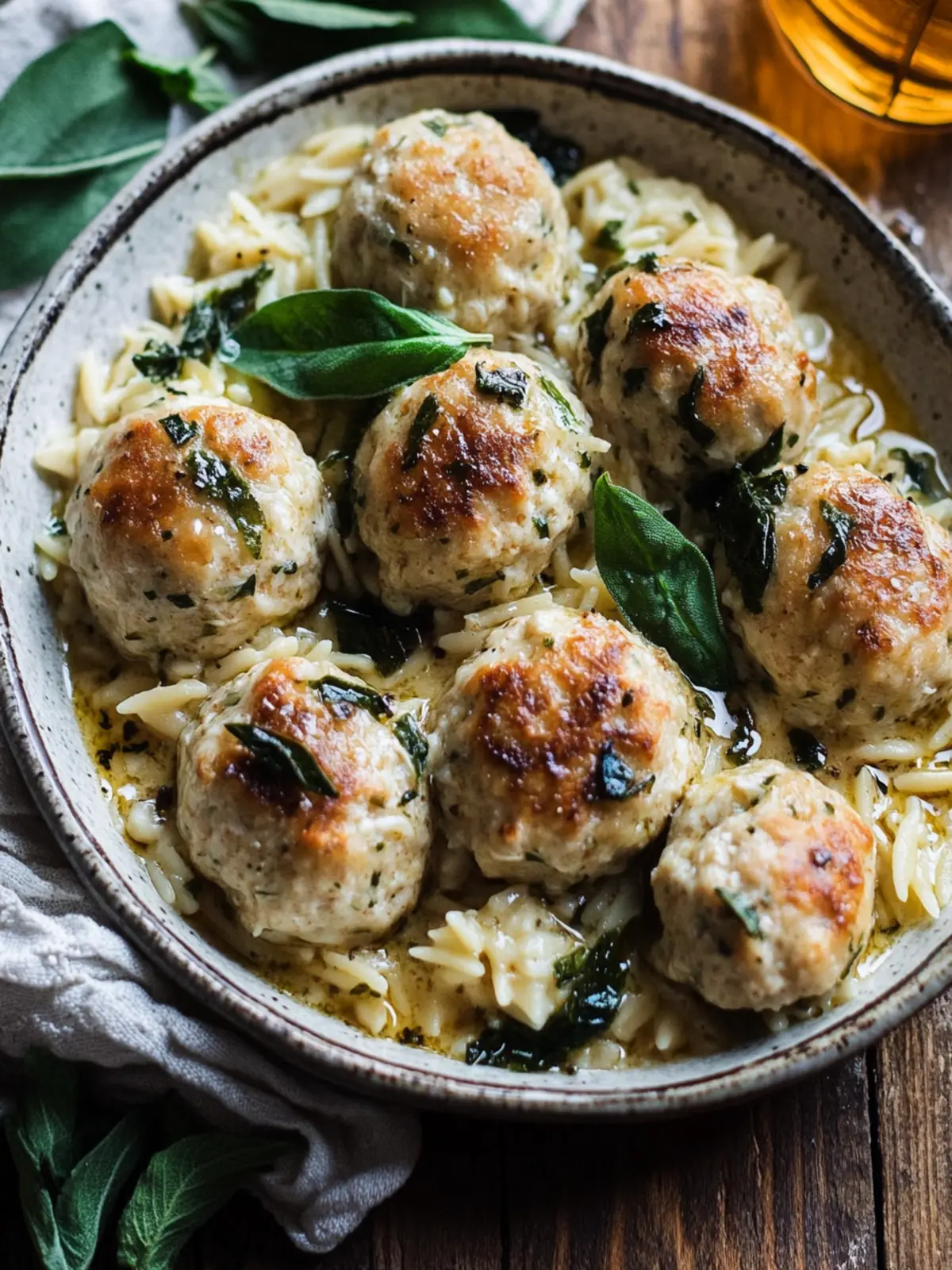
How to Store and Freeze Baked Sage Chicken Meatballs
Fridge: Store leftover Baked Sage Chicken Meatballs in an airtight container for up to 3 days. Reheat gently in the oven or microwave until warmed through.
Freezer: You can freeze the meatballs after baking; simply place them in a single layer on a baking sheet until firm, then transfer to a freezer-safe bag or container. They will keep for up to 3 months.
Reheating: To reheat frozen meatballs, thaw them overnight in the fridge and then warm in the oven at 350°F for about 20 minutes, or until heated through.
Orzo Storage: If you have leftover creamy orzo, store it separately in the fridge for up to 2 days. Reheat on low heat, adding a splash of chicken stock or cream to restore its creaminess.
Make Ahead Options
These Baked Sage Chicken Meatballs with Parmesan Orzo are perfect for meal prep enthusiasts! You can prepare the meatball mixture up to 24 hours in advance; simply combine all ingredients, shape into meatballs, and refrigerate them on a parchment-lined sheet pan. The orzo can also be prepped ahead for up to 3 days—just cook it fully and store it in an airtight container in the fridge. When you’re ready to serve, simply bake the meatballs and reheat the orzo gently on the stove, adding a splash of chicken stock if needed to loosen it up. This way, you’ll have a delicious, homemade dinner ready with minimal effort, just as comforting as when freshly made!
Expert Tips for Baked Sage Chicken Meatballs
-
Choose Fresh Ingredients: Always opt for fresh herbs and high-quality ground chicken. It enhances the flavor of your Baked Sage Chicken Meatballs significantly.
-
Don’t Overmix: When combining the ingredients, mix just until incorporated. Overmixing can lead to dense meatballs that lack the tenderness we all love.
-
Shape Evenly: Use a scale or your hands to ensure all meatballs are about the same size. This ensures even cooking and a beautiful presentation.
-
Check for Doneness: Always use a meat thermometer; chicken should reach an internal temperature of 165°F to ensure they’re perfectly cooked through.
-
Creamy Orzo Technique: Stir constantly when adding cream to the orzo to prevent clumping and ensure every grain is coated with luscious sauce.
-
Don’t Rush the Browning: Allow the meatballs to bake until golden. This step adds flavor and an appetizing color to your Baked Sage Chicken Meatballs.
Baked Sage Chicken Meatball Variations
Feel free to get creative and customize your dish with these delicious alternatives!
-
Gluten-Free: Swap the Italian bread for gluten-free breadcrumbs for a similar texture without the gluten.
-
Herb Blend: Add fresh thyme, rosemary, or even dill to the meatball mixture. This opens the door to new flavor dimensions, enhancing the dish’s freshness.
-
Spicy Kick: Incorporate diced jalapeños or a dash of hot sauce into the mixture for an extra zing that will delight heat lovers.
-
Vegan Option: Substitute ground chicken with a blend of mashed chickpeas and mushrooms. You’ll still enjoy satisfying bites packed with flavor!
-
Creamy Twist: For an indulgent twist, mix in a dollop of ricotta cheese into the meat puppet mixture, ensuring creamy centers in every bite.
-
Orzo Alternatives: Replace the orzo with quinoa or brown rice for a heartier grain, bringing nutrition and new textures to your meal.
-
Cheese Variations: Experiment by using feta or goat cheese instead of parmesan for a tangy flavor that pairs perfectly with the sage.
-
Savory Sauce: Enhance the orzo by stirring in some sun-dried tomatoes or artichoke hearts, adding a burst of Mediterranean flair to your dish.
With these variations, your Baked Sage Chicken Meatballs will always surprise and satisfy!
What to Serve with Baked Sage Chicken Meatballs?
Creating the perfect meal is all about harmony—the right flavors and textures complement one another beautifully. Let’s elevate your dining experience!
- Garlic Bread: The warm, buttery crispiness of garlic bread pairs perfectly with the savory meatballs, providing a delightful contrast in texture. It’s the ultimate comfort food.
- Roasted Vegetables: A medley of seasonal vegetables, like carrots and Brussels sprouts, adds a colorful and nutritious touch, enhancing the freshness with every bite. Enjoy the earthy and sweet notes they bring.
- Crisp Green Salad: A simple mixed greens salad tossed in a light vinaigrette refreshes the palate and balances the richness of the chicken meatballs and orzo. Add sliced almonds for a lovely crunch!
- Creamy Polenta: The velvety smoothness of creamy polenta complements the meatballs beautifully, creating a luxurious base that absorbs all the delicious sauce. It’s comfort on a plate.
- Steamed Asparagus: The bright, grassy notes of asparagus lightly steamed add a vibrant splash of color and flavor, creating a delightful contrast that elevates the entire dish.
- White Wine Spritzer: Pair your meal with a refreshing white wine spritzer made with sparkling water and a splash of citrus to cleanse the palate while sipping. Its effervescence is sure to keep the mood light and bubbly!
- Tiramisu: For dessert, a classic tiramisu brings coffee-infused sweetness, offering a wonderful finish to your meal that’s sure to leave everyone satisfied and smiling.
Create a symphony of tastes and textures that will transport you and your loved ones back to that inviting trattoria ambiance!

Baked Sage Chicken Meatballs with Parmesan Orzo Recipe FAQs
What’s the best way to choose fresh sage for the meatballs?
Select vibrant, green sage leaves that are free from any dark spots or wilting. The leaves should feel firm to the touch, and you should be able to smell their aromatic oil when you crush them between your fingers. This will ensure your Baked Sage Chicken Meatballs are bursting with fresh flavor.
How should I store leftover meatballs and orzo?
For those delicious leftovers, place the Baked Sage Chicken Meatballs in an airtight container in the fridge. They’ll stay fresh for up to 3 days. The creamy orzo should be stored separately, also in an airtight container, for a maximum of 2 days. When reheating, warm them gently on the stove with a splash of chicken stock or cream to rejuvenate their creaminess.
Can I freeze the meatballs?
Absolutely! Once the meatballs are baked and cooled, arrange them in a single layer on a baking sheet and freeze until firm. Then, transfer them to a freezer-safe bag or container. They can be stored for up to 3 months. When ready to enjoy, thaw them overnight in the fridge and reheat in the oven at 350°F for about 20 minutes, or until thoroughly heated.
What should I do if my meatballs are falling apart?
If you find your Baked Sage Chicken Meatballs are not holding together, it might be due to too much moisture. Make sure you’ve properly soaked the bread without excess water and mix the ingredients gently. If necessary, you can add a little more panko or breadcrumbs to bind them better. Allowing the meatballs to rest for 10 minutes before baking can also help stabilize them.
Are these meatballs suitable for individuals with gluten allergies?
Yes, but you’ll need to make a few adjustments. Replace the fresh Italian bread with gluten-free bread or panko crumbs. Ensure that the chicken stock and any additional seasonings you use are gluten-free as well. This way, you can still enjoy the delightful flavor of Baked Sage Chicken Meatballs in a gluten-free version!
How do I know when my meatballs are fully cooked?
To make sure your Baked Sage Chicken Meatballs are cooked through, use a meat thermometer to check the internal temperature, which should read 165°F. If you don’t have a thermometer, cut one in half to confirm there’s no pink in the center. The meatballs should also feel firm to the touch and have a golden crust on the outside.
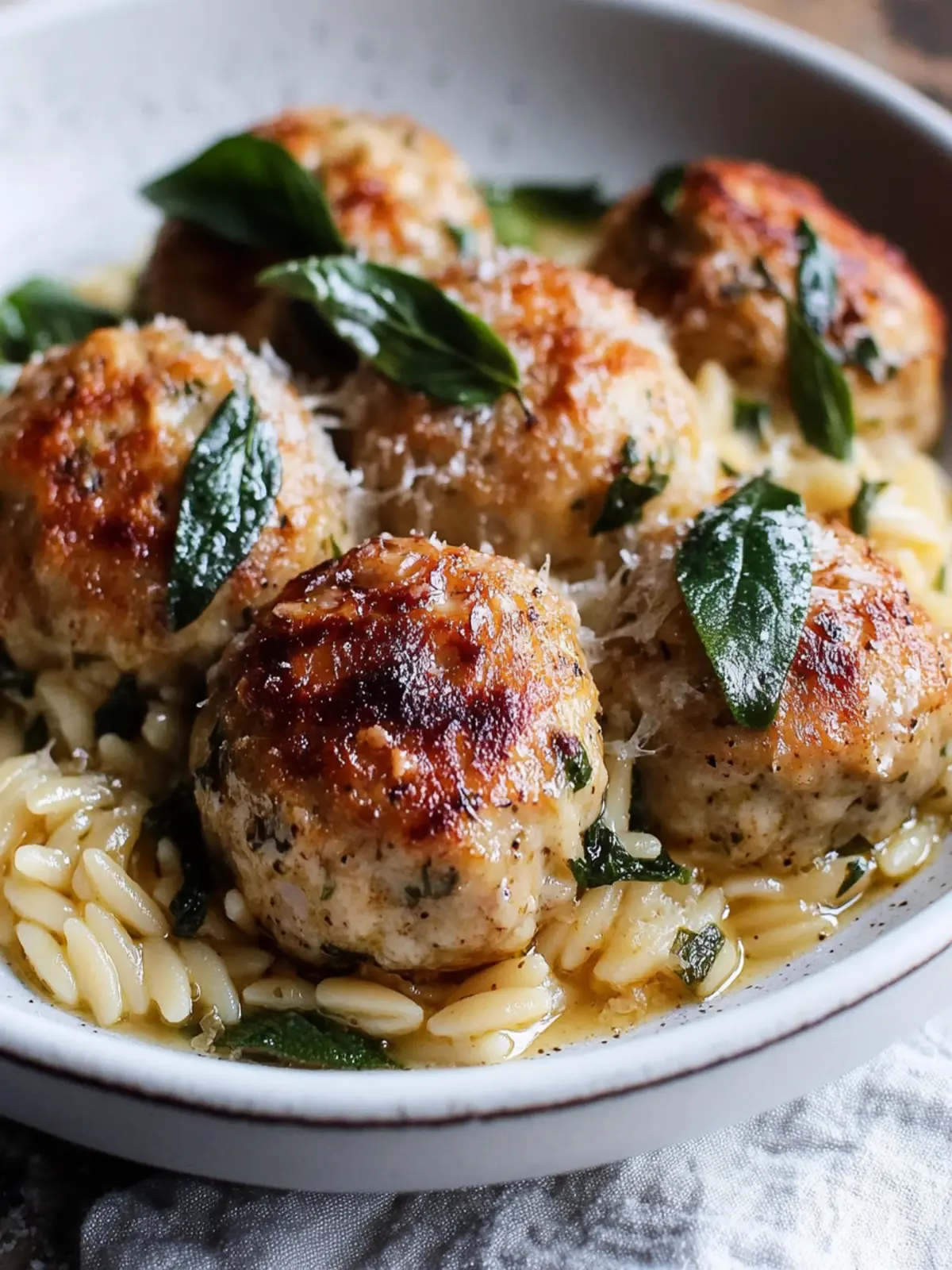
Savor Baked Sage Chicken Meatballs with Creamy Parmesan Orzo
Ingredients
Equipment
Method
- Preheat your oven to 450°F. Line a sheet pan with parchment paper and lightly oil it to prevent sticking. Having everything ready is crucial for a smooth cooking experience!
- Soak the diced bread in a large mixing bowl, pouring warm water over it. Let this mixture soak for at least 5 minutes, allowing the bread to soften and absorb the flavors.
- Sauté the shallot and garlic in a medium skillet over medium heat with 2 tablespoons of butter. Cook until softened, about 1 minute, infusing their aromatic goodness into the butter.
- Combine the granulated garlic and red pepper flakes into the skillet, turning off the heat afterward to let their flavors meld beautifully.
- Mix the ground chicken, parmesan, sage, parsley, and salt with the soaked bread and shallot mixture in the bowl. Give it a gentle mix until everything is well incorporated.
- Shape the mixture into approximately 15 meatballs, each about 2 oz. Pack them tightly to ensure they hold their shape, and place them evenly on the prepared sheet pan. Drizzle with olive oil for extra flavor.
- Bake the meatballs on the top rack for 25-30 minutes, or until golden and fully cooked through—your kitchen will smell divine!
- Crisp the sage leaves in the skillet with 2 tablespoons of melted butter over medium heat. Let them fry until crispy, then use a slotted spoon to transfer them to a paper towel to drain excess oil.
- Sauté the sliced shallots in the butter remaining in the skillet. Season with a pinch of salt, cooking for about 2 minutes until they become tender and aromatic.
- Stir in the orzo, pouring in the dry white wine with the tied thyme sprigs. Bring the mixture to a simmer and cook for about 2 minutes, letting the flavors infuse.
- Add the chicken stock when the orzo begins to simmer again. Reduce the heat to medium-low and cook for about 6 more minutes, stirring often, until the orzo is tender and flavorful.
- Incorporate the heavy cream, fresh spinach, and parmesan into the orzo, allowing the cream to simmer until the spinach wilts and the cheese melts. Season with salt to taste for perfection.
- Remove the thyme sprigs from the orzo, ensuring a smooth, rich sauce without any stringy bits.
- Serve the baked chicken meatballs over the creamy orzo, garnishing with crispy sage, freshly cracked black pepper, and more parmesan for a beautiful presentation.