
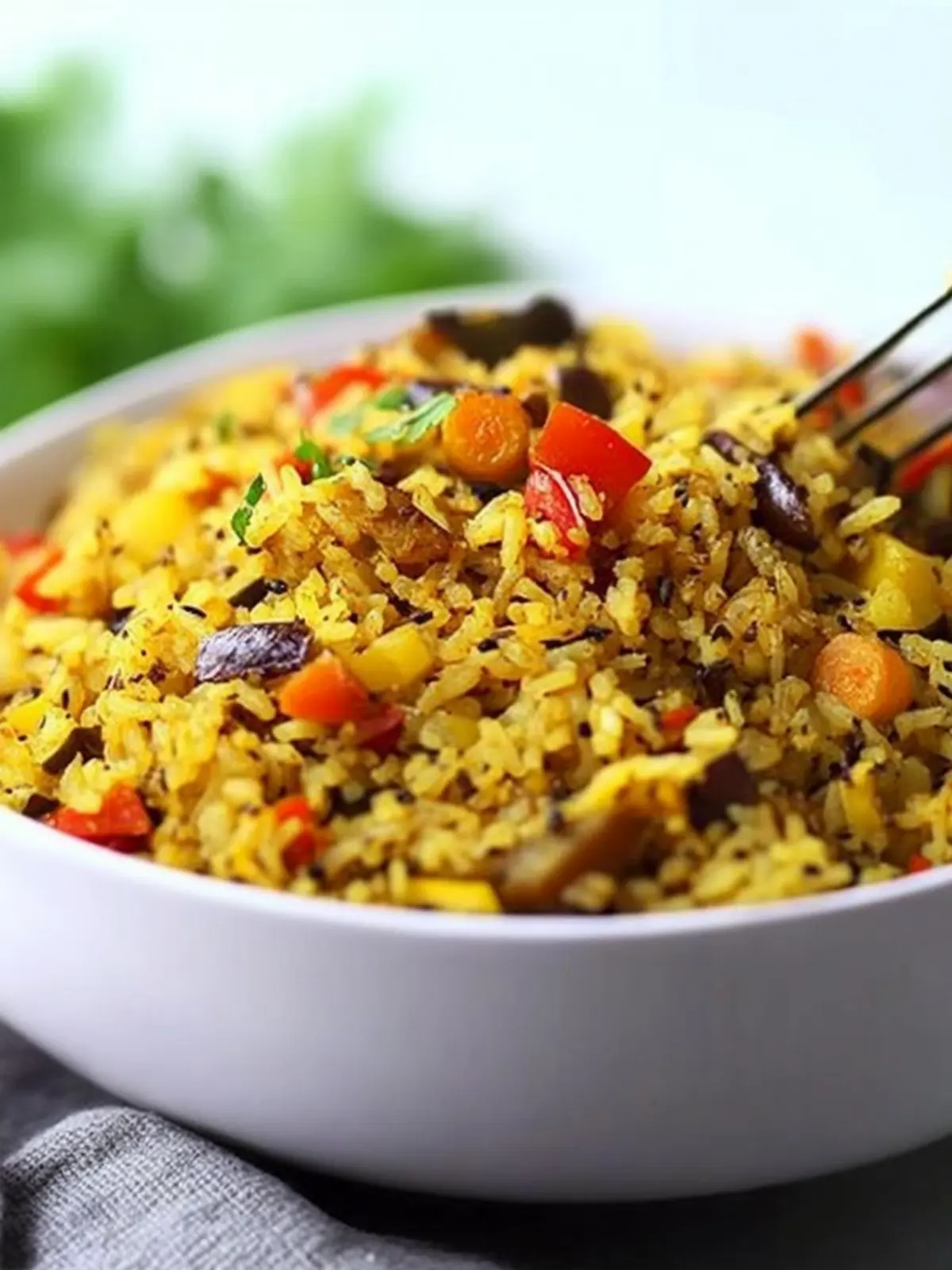
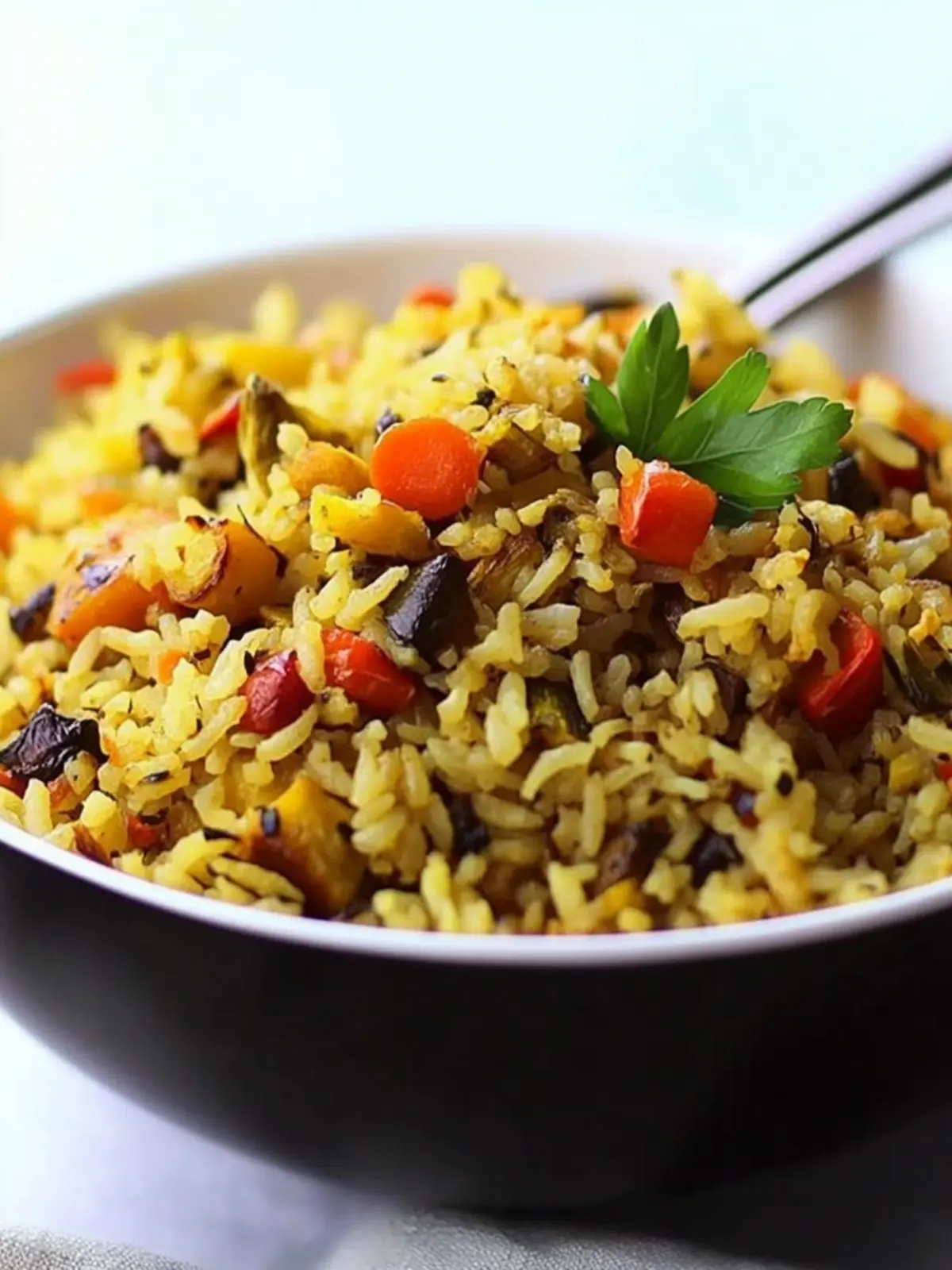
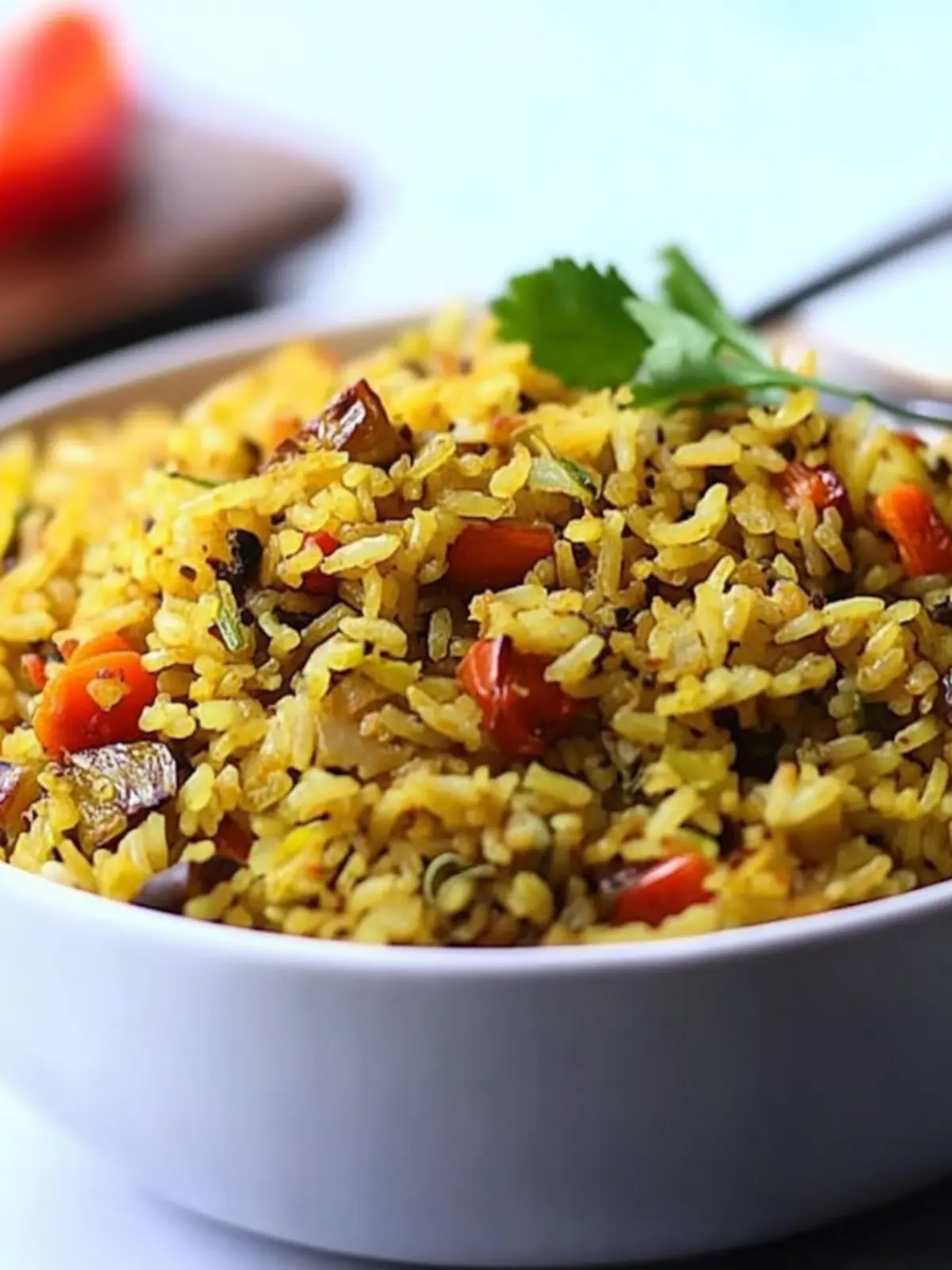
There’s something enchanting about the vibrant hues of roasted vegetables mingling with aromatic basmati rice—the warm embrace of this Middle Eastern Roasted Vegetable Rice can transform any meal into a delightful feast. I first stumbled across this dish during a dinner party with friends, where the delightful medley of spices and textures stole the show.
After boisterous laughter and delightful chatter, we found ourselves gathering around a vibrant table, and this colorful rice became an unexpected star of the evening. Bursting with flavor from turmeric, cumin, and a touch of cayenne, it offers a wonderful escape from the repetitive cycle of fast food meals.
As the comforting aroma of the roasted eggplant and carrots filled my kitchen, I realized that this recipe is not just an easy weeknight dinner; it’s a gateway to a world of flavors that’s perfect for impressing guests or simply enjoying a cozy evening at home. Let’s dive in and create a dish that’s not only delicious but also full of heart!

Why is Middle Eastern Roasted Vegetable Rice special?
Vibrant colors: This dish brings life to your plate with stunning roasted vegetables and fluffy basmati rice.
Flavor explosion: The blend of turmeric, cumin, and cayenne creates an aromatic feast that’s hard to resist.
Easy preparation: You’ll find it simple to whip up, making it a perfect choice for busy weeknights or elegant dinner parties.
Versatile dish: Pair it with your favorite protein, serve it warm or cold, and watch it magically adapt to your cravings.
Crowd pleaser: Impress your guests or family with a dish that tastes gourmet without the fuss—everyone will be asking for seconds!
For an even simpler experience, try this with cooked chickpeas.
Middle Eastern Roasted Vegetable Rice Ingredients
Transform your cooking with ease!
For the Rice
• White basmati rice – the perfect grain to absorb all those fragrant spices.
• Salt – enhances the flavors; use 1 teaspoon for cooking the rice and save the rest for seasoning vegetables.
For the Vegetables
• Eggplant – brings a hearty, creamy texture that complements the dish delightfully.
• Carrots – add a sweet crunch that balances well with the savory spices.
• Chickpeas – packed with protein; opt for canned for quicker prep, or cook your own from dried.
For the Spices
• Turmeric – the star spice that not only adds flavor but also a beautiful golden hue.
• Cumin – gives an earthy depth that rounds out the flavor profile perfectly.
• Black pepper – enhances the overall taste without overpowering the dish.
• Cayenne pepper – adds that subtle kick to elevate your Middle Eastern Roasted Vegetable Rice.
For the Finish
• Cilantro – freshens everything up with its vibrant flavor; feel free to substitute with parsley if desired.
• Pine nuts (optional) – toasted for a nutty crunch that takes this dish to another level.
• Olive oil – essential for roasting and adds richness to the entire meal; use high-quality for the best taste.
Let your kitchen be filled with the aromatic essence of this Middle Eastern Roasted Vegetable Rice as it brings warmth and joy to your table!
How to Make Middle Eastern Roasted Vegetable Rice
-
Rinse and soak: Start by rinsing the white basmati rice in a colander under cold water for about a minute. This helps remove excess starch. Transfer to a medium bowl, cover with 2 inches of cold water, and soak for 30 minutes to 3 hours for fluffier rice.
-
Preheat the oven: Set your oven to 425°F. Prepare a baking sheet by spraying it with nonstick cooking oil spray or lightly brushing it with olive oil. Spread the sliced eggplant and diced carrots evenly on the sheet.
-
Roast the vegetables: Drizzle the vegetables with 2 tablespoons of olive oil and sprinkle with 1/2 teaspoon of salt. Toss them well and roast for 10 minutes. Stir them with a wooden spoon and continue roasting for another 15-20 minutes until tender and caramelized. Allow to cool.
-
Drain the rice: After soaking, drain the rice in a colander and give it a quick rinse under cold water to remove any remaining starch.
-
Cook the rice: In a 5-quart pot, bring 2 cups of water to a boil. Add the rinsed rice and 1 teaspoon of salt. Stir to combine, return to a boil, and then simmer uncovered on medium heat for 5-8 minutes until the water is fully absorbed. Stir occasionally to prevent sticking.
-
Rinse again: Once all the liquid has absorbed, pour the rice into a colander, rinse with lukewarm water, and drain well. Rinse and dry the pot before returning it to the stove.
-
Combine ingredients: In the drained colander with the rice, add turmeric, cumin, black pepper, cayenne pepper, fresh chopped cilantro, chickpeas, and the roasted vegetables. Toss everything together gently to mix well.
-
Prepare to steam: Pour 1/4 cup of olive oil into the cleaned pot over medium heat. Carefully scoop the rice mixture into the pot, forming a pyramid shape, and create a hole in the center with a wooden spoon.
-
Steam the rice: Place a thin kitchen towel over the pot and tightly cover it with a lid. Reduce the heat to low and let it cook for 30 minutes, allowing the flavors to meld beautifully.
-
Serve: After 30 minutes, fluff the rice with a fork, and it’s ready to serve hot! Enjoy the wonderful aroma and vibrant flavors of your Middle Eastern Roasted Vegetable Rice.
Optional: For an extra crunch, top with toasted pine nuts just before serving.
Exact quantities are listed in the recipe card below.
Tips for the Best Middle Eastern Roasted Vegetable Rice
Soak the Rice: To achieve fluffy basmati rice, soak it for at least 30 minutes. This helps release excess starch and enhances texture.
Watch the Roasting: Stirring the vegetables halfway through roasting ensures even caramelization and enhances flavor. Keep an eye on them to prevent burning.
Spice Balance: Adjust the spice levels according to your palate. If you prefer less heat, reduce the cayenne pepper while still enjoying the aromatic charm of turmeric and cumin.
Steaming Technique: The towel under the lid is crucial; it traps moisture while allowing steam to escape, which helps achieve the perfect fluffy rice.
Optional Additions: Feel free to add other vegetables like bell peppers or zucchini for added flavor and nutrition, making your Middle Eastern Roasted Vegetable Rice even more versatile!
Make Ahead Options
These Middle Eastern Roasted Vegetable Rice components are perfect for meal prep enthusiasts! You can roast the eggplant and carrots up to 3 days in advance; simply allow them to cool completely, then store in an airtight container in the refrigerator. Likewise, the rice can be cooked and refrigerated for up to 2 days before serving. When ready to enjoy, simply reheat the rice gently in a pot with a splash of water to keep it moist, then stir in the prepped roasted vegetables and chickpeas. This approach not only saves time but also ensures that the flavors meld beautifully, creating a dish that’s just as delicious as when it was freshly made!
Storage Tips for Middle Eastern Roasted Vegetable Rice
Fridge: Store leftover Middle Eastern Roasted Vegetable Rice in an airtight container in the refrigerator for up to 3 days. Reheat gently on the stove or microwave to maintain moisture.
Freezer: For longer storage, freeze the rice in a freezer-safe container for up to 3 months. Thaw overnight in the fridge before reheating.
Reheating: When reheating, add a splash of water and cover to keep the rice moist. This helps revive its fluffy texture and delicious flavors.
Room Temperature: Allow the rice to cool for about 30 minutes before transferring to the fridge to prevent condensation buildup.
What to Serve with Middle Eastern Roasted Vegetable Rice?
This dish is a vibrant celebration of flavors that can easily shine on its own, but pairing it with complementary sides can elevate your meal experience even further.
-
Garlicky Spinach: Fresh spinach sautéed with garlic adds a bright, earthy note that contrasts beautifully with the richness of the roasted vegetables.
-
Yogurt Sauce: A cool and creamy yogurt sauce makes for an excellent dip, lending a refreshing tanginess that harmonizes with the spices in the rice.
-
Grilled Chicken: Juicy, marinated chicken adds protein to your meal while soaking up all the aromatic flavors of the rice, creating a hearty dish.
-
Cucumber Salad: Crisp cucumbers tossed with lemon and herbs provide a refreshing crunch, balancing the dish’s hearty nature and brightening the palate.
-
Pita Bread: Warm, soft pita bread is perfect for scooping up the rice, making every bite a delightful journey of textures.
-
Herbal Tea: A fragrant cup of mint or chamomile tea to finish off the meal brings soothing warmth and complements the dish’s aromatic spices.
-
Baklava: For dessert, the sweet, flaky layers of baklava serve as the perfect finishing touch to an exciting meal, leaving everyone satisfied and happy.
Middle Eastern Roasted Vegetable Rice Variations
Feel free to explore the delicious possibilities with your Middle Eastern Roasted Vegetable Rice!
-
Vegan: Substitute olive oil with avocado oil and skip the pine nuts for a plant-friendly dish.
-
Spicy Kick: Add extra cayenne pepper or diced jalapeños to bring the heat if you crave something fiery.
-
Herbed Rice: Incorporate fresh herbs like mint or parsley for a refreshing twist that brightens every bite.
-
Quinoa Swap: Replace white basmati rice with quinoa for a protein-packed alternative that still delights.
-
Nut-Free: Omit the pine nuts, or swap with sunflower seeds for a crunchy, nut-free option without sacrificing texture.
For added rhythm, consider adding toasted sunflower seeds on top; they lend a delightful crunch that makes each mouthful exciting!
-
Sweet Addition: Toss in some raisins or dried apricots during the mixing step for a touch of sweetness that perfectly complements the spices.
-
Zesty Touch: A splash of lemon juice over the finished rice can elevate the flavors and brighten the dish impressively.
-
Mixed Vegetables: Feel free to swap in your favorite seasonal vegetables, such as bell peppers or zucchini, to customize based on what you have available.
Middle Eastern Roasted Vegetable Rice Recipe FAQs
How do I select ripe eggplant for this recipe?
Choose eggplants that are firm, heavy for their size, and free from dark spots. The skin should be shiny and smooth, as these indicate freshness. If possible, press gently with your finger; it should spring back quickly, suggesting it’s perfectly ripe!
How should I store leftovers of Middle Eastern Roasted Vegetable Rice?
Store any leftover rice in an airtight container in the refrigerator for up to 3 days. Make sure to let it cool for about 30 minutes before transferring it to prevent condensation. When ready to enjoy again, gently reheat it on the stove or in the microwave, adding a splash of water to maintain moisture.
Can I freeze Middle Eastern Roasted Vegetable Rice?
Absolutely! Freezing is a great option for meal prep. Once cooled, pack the rice in a freezer-safe container or resealable freezer bags,, ensuring to remove as much air as possible. It can be frozen for up to 3 months. To reheat, simply thaw overnight in the fridge and warm up on the stove, adding a splash of water to fluff it up.
What should I do if my roasted vegetables are soggy?
If your vegetables turn out soggy, it could be due to overcrowding the baking sheet or not roasting them long enough. For next time, ensure there’s enough space between the veggies, allowing hot air to circulate. You can also give them a little extra time in the oven until they caramelize beautifully—aim for that golden-brown goodness!
Are there any dietary considerations to keep in mind for Middle Eastern Roasted Vegetable Rice?
Yes! This dish is naturally vegetarian and can easily be made vegan by ensuring all ingredients are plant-based (e.g., chickpeas are usually safe). If you have nut allergies, you might want to skip the pine nuts. Always double-check ingredient labels for any potential allergens, especially for canned products!
How can I make this dish spicier if I love heat?
If you crave a spicy kick, feel free to increase the cayenne pepper or add some diced fresh chili peppers when mixing in the spices. Another excellent idea is to serve it with a drizzle of spicy harissa sauce on top—just adjust according to your personal preference!
Savory Middle Eastern Roasted Vegetable Rice You’ll Love
Ingredients
Equipment
Method
- Rinse white basmati rice in a colander under cold water for about a minute. Transfer to a bowl, cover with 2 inches of cold water, and soak for 30 minutes to 3 hours.
- Preheat the oven to 425°F. Prepare a baking sheet with nonstick oil or brush with olive oil. Spread sliced eggplant and diced carrots evenly.
- Drizzle vegetables with 2 tablespoons of olive oil and sprinkle with 1/2 teaspoon salt. Toss and roast for 10 minutes. Stir and roast for another 15-20 minutes until tender.
- Drain the soaked rice in a colander and rinse under cold water.
- In a 5-quart pot, bring 2 cups of water to a boil. Add rinsed rice and 1 teaspoon salt. Stir, bring to a boil, then simmer uncovered for 5-8 minutes until the water is absorbed.
- Once liquid is absorbed, pour rice into a colander, rinse with lukewarm water, and drain well. Rinse and dry pot before returning to stove.
- In the colander with rice, add turmeric, cumin, black pepper, cayenne, cilantro, chickpeas, and roasted vegetables. Toss gently to mix.
- Pour 1/4 cup olive oil into the cleaned pot over medium heat. Scoop rice mixture into the pot, forming a pyramid shape and create a hole in the center.
- Cover the pot with a thin kitchen towel and lid. Reduce heat to low and cook for 30 minutes.
- After 30 minutes, fluff rice with a fork and serve hot.